

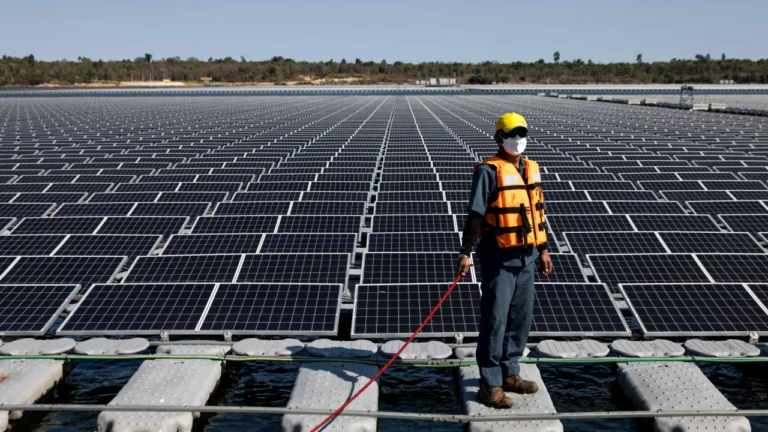
In a dramatic shake-up to the international solar industry, the U.S. Department of Commerce has completed sweeping tariffs on solar panel imports from Southeast Asia, with rates reaching as high as 3,521%. The ruling, after a year-long probe, highlights rising trade tensions and has caused heated debate in the renewable energy industry.
Background: A Crackdown on Circumvention
The move was made as allegations surfaced that Chinese solar manufacturers were circumventing existing tariffs by exporting production through Cambodia, Malaysia, Thailand, and Vietnam. Chinese businesses, the Commerce Department asserted, were in effect operating bases in those countries to evade duties that were put in place on panels produced in China. After months of probe, officials found that the operations unjustly gained from government subsidies and were also involved in “dumping”—selling products in the U.S. at prices lower than fair market.
This investigation—one of the most high-profile trade probes in years—has now led to the imposition of both anti-dumping (AD) and countervailing duties (CVD) on a range of Southeast Asian solar products.
The Tariff Breakdown
The newly finalized tariffs vary by country and company, and they are nothing short of eye-popping:
- Cambodia: AD up to 125.37%; CVD up to 3,403.96%
- Malaysia: AD up to 81.24%; CVD up to 168.80%
- Thailand: AD up to 202.90%; CVD up to 799.55%
- Vietnam: AD up to 271.28%; CVD up to 542.64%
Large producers are also being subjected to special fines. Trina Solar and Jinko Solar, two of the large producers with domestic factories, were especially heavily charged, and the move created a furor in the industry.
Support and Backlash
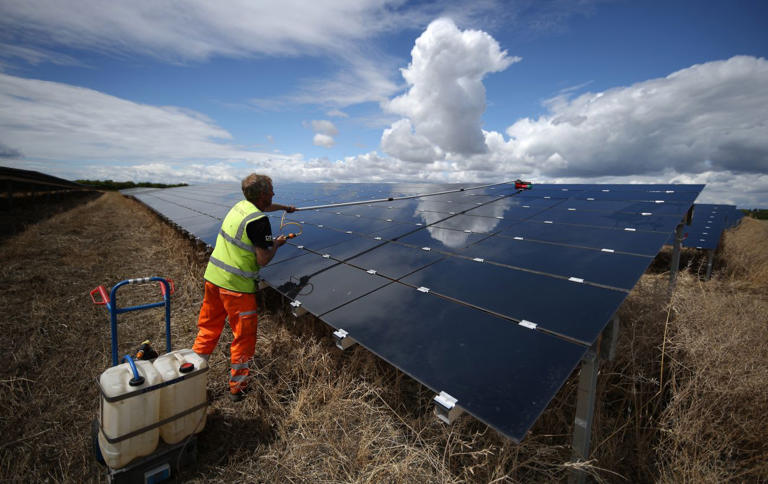
The tariffs have been welcomed by the American Alliance for Solar Manufacturing Trade Committee, which asserts that enforcing trade rules will encourage the return of domestic production. “This is a win for American solar workers and businesses that play by the rules,” said a committee spokesman.
But warnings are being sounded by critics. The SEIA is cautioning that the tariffs will drive up costs, delay projects, and imperil the Biden administration’s clean energy goals. “These tariffs are a step back for our industry’s ability to scale up,” said SEIA President Abigail Ross Hopper. “We’re seeing increased costs at a time when we should be accelerating deployment, not decelerating it.”
Ripple Effects on the U.S. Solar Market
Experts say the move has the potential to unsettle the solar supply chain, which is highly reliant on Southeast Asian-sourced components. As demand for clean power is at a historic high, any supply bottleneck or price fluctuation could delay ventures and affect smaller developers the most.
“The U.S. would prefer to make more panels domestically, but we don’t yet have the manufacturing capacity to overnight substitute Southeast Asian imports,” said solar analyst Kevin Lucas of Energy Innovation. “In the short term, this could possibly damage installation rates.”
What Comes Next?
While the Commerce Department’s finding is final, the tariffs won’t go into effect right away. They are waiting for the U.S. International Trade Commission (ITC) to have a final say in the matter. In June 2025, the ITC will make a finding as to whether the U.S. solar industry has been “materially harmed” by the imports. A negative ruling could postpone the duties, but most expect that the ITC will agree with the Commerce findings.
Meanwhile, the debate regarding how best to support domestic manufacturing while keeping clean energy affordable continues to increase.
Conclusion: A Defining Moment for Solar Policy
The tariffs are more than a trade enforcement measure—they are a sea change in U.S. renewable energy policy. As policymakers balance competing interests of domestic industry building, climate goals, and global diplomacy, the solar industry is in the middle of a high-stakes battle.
One thing is for sure: how the U.S. navigates this next phase will reshape the future of solar power here and worldwide.
Stay tuned to BizHedge for ongoing coverage on this critical issue in international trade and energy policy.


Downloaded the sv66apps a few days back and I like it! Much easier to play on my phone. Pretty smooth too. Give it a try at sv66apps. May your odds be forever in your favour.
Yo, jili49login is legit! Quick and easy access, no BS. If you’re looking to get straight to the games, this is your spot. Check it out: jili49login
I don’t think the title of your article matches the content lol. Just kidding, mainly because I had some doubts after reading the article.
Heard people talking about some betting site called f8betlgoptimusl9 . Anyone tried it? Worth a look?
Your point of view caught my eye and was very interesting. Thanks. I have a question for you.