

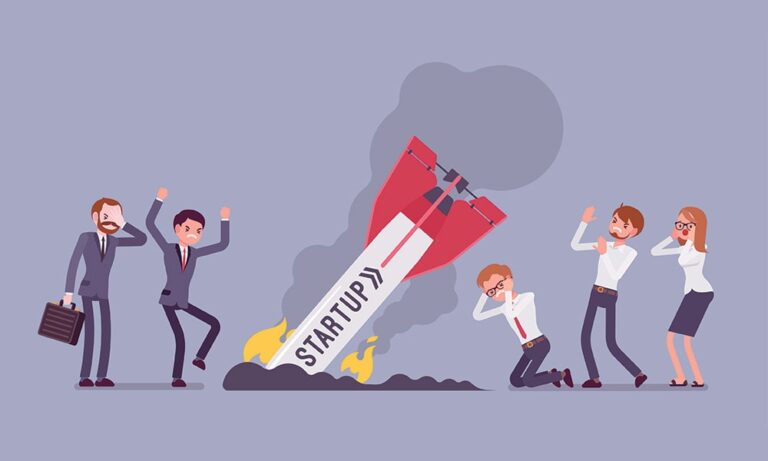
Why 90% of Startups Fail, and What to Do About It
Let’s face it: The startup world is not kind to dreamers without a plan.
Did you know that a study conducted by CB Insights revealed that 90% of startups fail? Most fail not because their ideas were bad, but because of poor execution, market timing, or a complete disconnect from what customers actually want.
Do you want your startup to be among the successful 10%? Here’s the twist: studying failure is one of the fastest ways to success. Think of it as reverse-engineering your odds.
In this blog, we will unpack the most commonly failed startup concepts, real post-mortems, and hard-won lessons you won’t find on glossy pitch decks.
Read on to find out more;
Startup Ideas That Frequently Flop (With Real Data Behind Them)
Not all ideas are created equal. Some are doomed before you even register the domain. Here is a list of some of the startup ideas that frequently fail:
- The Bar, Café, or Restaurant Fantasy
Opening a food joint sounds cool, right? Until reality bites.
The industry failure rate hovers around 60% to 80% within the first five years. Rent, staffing, inventory, and razor-thin margins crush even the most passionate founders.
The problem is that most founders enter without experience or backup capital. It’s an attractive idea with brutal economic dynamics.
- T-Shirt and Apparel Brands
You’ve probably heard this one: “Let’s make streetwear.”
Truth is: The fashion eCommerce space is flooded. Thousands of new Shopify stores pop up monthly, most without any real niche or loyal tribe.
The real statistic? Approximately, 98% of apparel brands fail within their first three years. So, unless you’re building Supreme 2.0 or printing shirts for a cult following, odds are you will drown in customer acquisition costs.
- The Next Instagram Syndrome
Social media startups rarely succeed. Why?
Because platforms only thrive with viral growth and network effects; neither of which are easy to engineer. Research has it that close to 90% of social networking platforms fail within the first few years of operation
If you are planning to build another “connect with friends” app, be prepared to battle Meta, TikTok, and 10,000 other clones. If users don’t stick then you are in for a great toast.
- Ad-Based Startups Without Traffic
Ads can work, but only at scale. Most founders often create blogs, media sites, or apps banking on ad revenue (which is not a completely bad idea). The only problem is; without millions of monthly views, it’s pocket change. Plus, Google and Facebook hoard the lion’s share of digital ad dollars.
- Tech Gimmicks Without Market Validation
These gimmicks may feel quite innovative. You may begin thinking, “No one has done this before,” without realizing there might be a good reason for that. It’s so easy to fall in love with the cleverness of your own idea.
What we don’t realize is that: There’s a difference between cool and commercially viable. Just because something is possible doesn’t mean it’s valuable.
Product-market fit is not about impressing people. It’s about creating something they will miss if it’s gone. Until you validate that demand, all the tech in the world won’t save you.
- Too Early for the Market
We agree that some ideas are great, just not now.
Take WebTV or Ask Jeeves, both were visionary, but internet speeds and user behaviors didn’t support their models yet. Even Google Glass flopped because society was not ready to walk around with cameras on their faces.
Timing is not everything, but it can break even the best innovations.
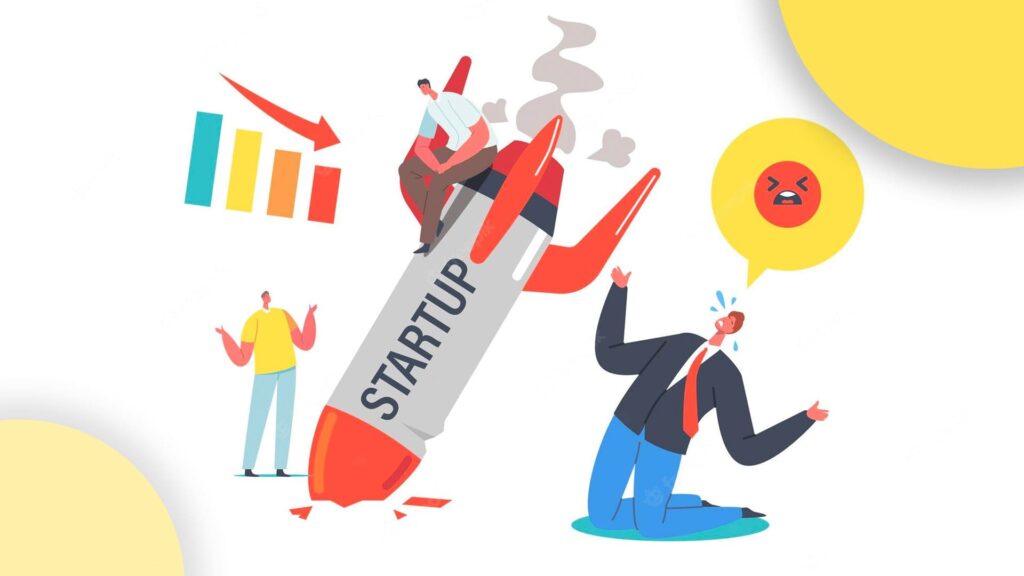
Real Failed Startups — What Happened and Why
It’s easy to laugh at billion-dollar flops from the outside. But every one of these startups was once the darling of investors, media, or users until it all unraveled. Learning from big-name flameouts can save your own from ending the same way.
- Color – $41 Million for a Camera App Nobody Used
A social photo app that used proximity data to group users’ photos together in real-time. Color raised $41 million in funding before launch from top-tier VCs.
What happened next? The launch flopped. Users didn’t get it because apparently, the UX was confusing, the value was unclear, and the app didn’t do anything users couldn’t already do with Instagram or Facebook.
- Webvan
Webvan was an online grocery delivery with warehouses, logistics, and last-mile delivery developed over 20 years ago.
Webvan raised over $800 million, expanded into 26 cities, and built massive infrastructure before proving real demand. Within three years, it filed for bankruptcy. What happened is; Webvan bet big on scale before product-market fit.
- Pets.com
Pets.com began as an online pet supply store, made famous by a sock puppet and a Super Bowl ad. The business burned through $300 million, went public in 1999 and shut down less than a year later.
The real problem according to Investopedia was that pets.com became the poster child for dot-com absurdity, but its biggest flaw was simple economics. Shipping bulky, low-margin products (like dog food) directly to customers at a loss was never going to scale.
- Theranos
Theranos was a revolutionary blood testing company that could diagnose multiple conditions from a single drop of blood.
The company raised approximately $274 million, reached a $10 billion valuation, and duped investors, regulators, and the media before it was exposed as a fraud.

The Root Causes: Why Startups Fail Over and Over
Now that you have seen the failures. Now let’s cut to the core.
You will notice that these startups didn’t just crash randomly, they followed patterns. Here’s what make 90% of startups fail;
- No Market Need
Picture this: You decide to build something people think is interesting, but not something they are actually willing to pay for.
Maybe you love the idea. Maybe your friends say it is “cool.” But until real users vote with their wallets, you’re just solving imaginary problems.
- Execution Gaps
As Matt Higgins, CEO and Cofounder of RSE Ventures puts it: “Ideas are cheap. Execution is everything”.
Maybe the vision was solid, but the product was buggy, the onboarding sucked, or you couldn’t ship fast enough. Execution is where great startups quietly separate themselves from everyone else.
- Cash Burn
Raising capital for your startup might be easy, but spending it wisely is where the problem comes in.
A startup is not a money pit with a vision board, it’s a system that needs traction, efficiency, and discipline. Burn through investor cash without results, and you’ll be fundraising at your funeral.
- Co-Founder Drama
Misaligned values, egos, or unclear roles between founders can silently sink everything.
You don’t need to hate each other to fail, you just need to disagree on what the company is or where it’s going. Investors spot the cracks before the pitch is even over.
- Shiny Object Syndrome
You keep pivoting, not strategically, but emotionally. Every new tool, trend, or headline sends you down a rabbit hole.
Startups are not built in brainstorm mode. They’re built in grind mode. Chasing trends without depth means you’re always starting, never finishing.
- Wrong Timing
Sometimes the market’s not ready for your idea just yet. Sometimes it moved on. Either way, timing is a silent killer.
You can’t sell a 2030 product in a 2025 world or launch a TikTok competitor after TikTok already won. Early is just another form of wrong.
- Broken Business Models
If your path to revenue is “ads later” or “we’ll scale first,” you’re probably walking into a wall.
Investors don’t fund downloads; they fund cash flow. If your business doesn’t clearly show how it earns and keeps money, it’s already broken.
- Commoditized Niches
You’re playing in a market where 10,000 others are already fighting for scraps and you have no edge.
Think drop-shipping, generic SaaS, “AI-powered task managers,” or another Shopify T-shirt brand. If anyone can build it, no one will care what you did.
How to Avoid These Traps: Lessons for Smart Founders
“We must learn what customers really want, not what they say they want or what we think they should want.”
― Eric Ries, The Lean Startup
Keep the following tips in mind:
- Test ideas, don’t romanticize them
Treat your startup like a hypothesis. Validate early with pre-orders, waitlists, or targeted surveys before writing a single line of code. - Validate first
Don’t build blind. Start with landing pages or MVPs that measure real interest—and back those with hard data. - Steer clear of crowded playgrounds
If an idea seems effortless to launch, it probably lacks moat. Easy entry = fierce competition. - Balance passion with proof
Enthusiasm is invaluable, but without traction metrics, it’s just noise. - Stay lean
Hold off on hiring sprees or fancy expansions until your product-market fit is crystal clear. - Learn from others’ scars
Every failed startup is a class in what not to do. Read the post-mortems. - Solve urgent problems
If users don’t need it now, they won’t pay for it later. That’s the difference between hobby and business.
Where to Go Next: Startup Failure Archives Worth Bookmarking
Want to dig deeper? These resources are goldmines:
- Failory Graveyard – Post-mortems from real startups.
- Autopsy.io – Causes behind startup deaths.
- Startup Cemetery – Straightforward failure database.
- Reddit’s /r/Entrepreneur – Brutal honesty from real builders.
- All My Failed Startup Ideas by Lee Jean – A brutally honest reflection.
Conclusion: Don’t Just Build—Study the Wreckage First
Every founder wants to succeed. But those who succeed the fastest? They’re the ones who studied failure like it was gospel.
Read the post-mortems. Test before you build. Ignore the hype. Solve real problems.
Remember; you don’t need to reinvent the wheel; you just need to make sure it rolls.
Found this helpful? Share it with someone chasing their first big idea. Or better, help them avoid chasing the wrong one. Subscribe to Bizhedge for more insights!